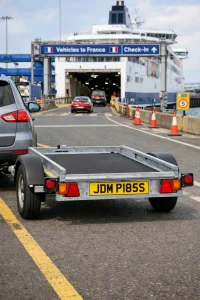
It was a soggy Tuesday morning in North Yorkshire when Mark – a seasoned horse owner – hitched his trusty trailer and set off towards the Channel Tunnel, passport in hand and paperwork prepped. What he didn’t expect was to be turned around at the French border. The reason? His trailer, although safely secured and perfectly maintained, lacked one thing: a separately registered trailer number plate.
For thousands of UK trailer owners like Mark, this is an all-too-common oversight. Whether you’re towing a caravan, transporting livestock, or carrying motorcycles for a weekend event in Europe, understanding trailer number plate regulations isn’t just a box-ticking exercise – it’s essential for staying legal and avoiding unnecessary fines or trip interruptions.
In this article, we’ll walk you through the latest UK rules around trailer number plates – especially if your trailer weighs over 750kg. You’ll learn when and why your trailer needs its own registration plate, how to get one, and how JDM Plates can help you stay compliant with a perfectly legal, road-ready trailer plate – even in tight-fitting spaces.
Understanding Trailer Number Plate Requirements in the UK
Imagine the UK’s road network as a living, breathing organism – vehicles flowing like blood through arteries, each uniquely tagged for identification. Trailers, especially larger ones, are no exception. They’re not just silent passengers hitched to your car – they are, in the eyes of the law, independent entities once they hit a certain size and purpose.
The 2019 DVLA Trailer Registration Scheme
In March 2019, the DVLA introduced a mandatory trailer registration scheme for certain trailers used internationally. This was prompted by the UK’s commitment to the 1968 Vienna Convention on Road Traffic, ensuring that British vehicles – including towed trailers – remain identifiable and legally operable across borders.
Under this legislation:
- Any trailer weighing over 750kg and used outside of the UK must be registered with the DVLA.
- Once registered, these trailers must display a separate trailer number plate, issued specifically for that trailer.
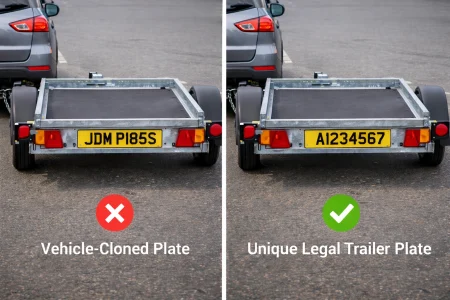
- The plate must not be a copy of the towing vehicle’s registration, but rather a unique trailer registration number issued by the DVLA.
It’s the kind of law that catches people off guard – especially those used to the older practice of duplicating the car’s number plate for the trailer. That’s no longer valid for certain scenarios, and ignorance can cost you.
Domestic Use vs International Towing
Let’s be clear: if your trailer is only used within the UK, and not hired or over a certain size, you may not need to register it separately. But if you’re travelling through France, Spain, Germany or Ireland, or even taking a quick cross-border trip into Europe, the trailer must carry its own distinct trailer number plate.
To bring this closer to home: Sarah, a boating enthusiast from Devon, had been towing her jet ski trailer to Cornwall for years with no issue. But when she planned a family holiday to Lake Geneva, the game changed. Her trailer – though fully roadworthy and under her car’s control – needed to be registered and display its own plate or she’d be breaching international transport laws.
The Why Behind the Law
At the heart of this requirement is safety, accountability, and cross-border enforcement. When trailers are involved in road incidents abroad, authorities need a quick and reliable way to trace them back to their owners. A cloned plate from the towing vehicle simply isn’t enough in these cases.
Think of it like giving your trailer a passport – a unique identity to prove it belongs to you and meets legal road standards, wherever you’re travelling.
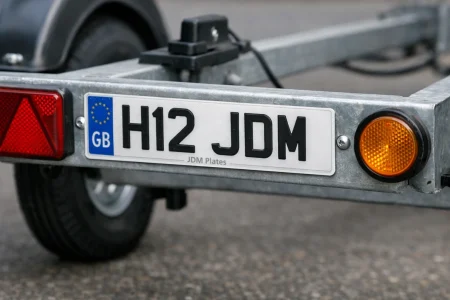
Expert Tip: Trailers registered under this scheme will receive a unique number that looks like GBTR123456. This must be displayed on a separate plate that meets DVLA formatting and visibility standards. Here’s where JDM Plates comes in – supplying fully legal, high-quality trailer number plates in various sizes, including the smallest legal trailer plates in the UK. Perfect if you’ve got limited mounting space.
Which Trailers Need to Be Registered?
Let’s picture two neighbours: Dave and Emma.
Dave tows a small open trailer to the local garden centre on weekends. Emma, on the other hand, owns a horsebox she regularly takes to competitions across Europe. They both have trailers – but only one is legally required to register it under DVLA rules. Can you guess which?
Understanding whether your trailer needs to be registered – and display its own number plate – all comes down to weight and international use.
Weight Thresholds: Over or Under 750kg
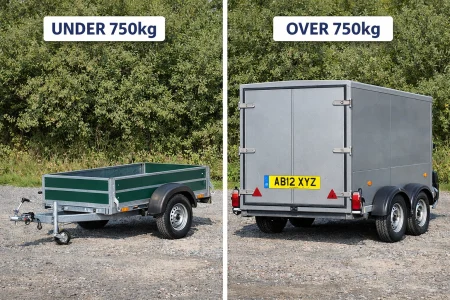
According to UK law, trailers used internationally and weighing over 750kg in gross weight must be registered with the DVLA before leaving the country. Gross weight means the total maximum weight of the trailer plus its load – not just the trailer’s unladen weight.
- Under 750kg:
If your trailer weighs less than this fully loaded, you don’t need to register it – even if you tow it abroad. - Over 750kg:
If your trailer exceeds 750kg and will be used outside the UK, you must register it and display a trailer registration plate.
👉 Gross weight is normally found on the trailer’s VIN plate or documentation.
Domestic vs International Use
If your trailer is used only in the UK, the current rules do not require separate trailer registration, regardless of weight – unless it’s hired or falls under specialist use categories.
However, if you’re towing internationally – through Europe or Ireland, for instance – DVLA registration becomes a legal requirement for trailers over 750kg.
This means if you’re planning a road trip to Europe with your caravan, horsebox, or boat trailer, it must carry its own unique number plate, separate from your vehicle’s.
Tip: You can still order a matching trailer plate for domestic use using your vehicle registration, which is legal for UK-only towing. Order here
Trailer Types That Typically Require Registration
Below is a quick breakdown of common trailer types that may require registration when used internationally:
| Trailer Type | Typically Over 750kg? | Needs Registration Abroad? |
| Horseboxes | ✅ Yes | ✅ Yes |
| Caravans | ✅ Yes | ✅ Yes |
| Large box trailers | ✅ Yes | ✅ Yes |
| Jet ski/boat trailers | ✅ Often | ✅ Yes |
| Motorcycle trailers | ❌ Usually Not | ❌ Not Required |
| Small utility trailers | ❌ Usually Not | ❌ Not Required |
Note:- the table above is for guidance only; please ensure you carry out your own due diligence before towing a trailer
This is where many trailer owners trip up. A double axle trailer or larger single axle often exceeds the 750kg mark before it’s even loaded. Add a horse, bikes, or tools – and you’re well over the limit.
Trailer Categories: O1 and O2 Explained
Under EU and UK classifications:
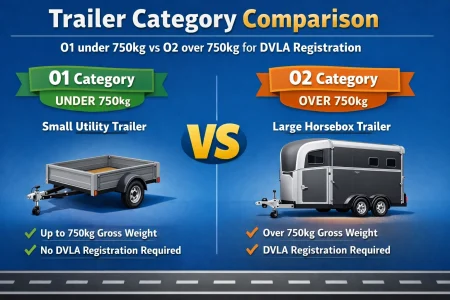
- Category O1: Trailers with a maximum mass not exceeding 750kg
- Category O2: Trailers with a maximum mass between 751kg and 3,500kg
If your trailer falls into the O2 category and you’re planning to use it internationally, it must be registered with DVLA and display a trailer number plate.
Real World Example
Earlier this year, a family from Kent planned to take their caravan to Spain. They were stopped at the French border and asked to show trailer registration documents. They had the caravan insured, serviced, and packed – but lacked the DVLA registration. They were fined and sent back to Calais to correct it.
It’s a costly mistake that could be avoided with a 10-minute online registration and a legal plate fitted to the back of the trailer.
How to Register Your Trailer With the DVLA
Registering your trailer might sound like a job best left for the paperwork pile – but in truth, it’s a fast, affordable process that could save you a major headache at the border.
Let’s rewind to 2021. Tony, a tradesman from Leicester, was heading to the Netherlands for a classic car show. His covered trailer, carrying his restored 1974 Datsun, weighed over 750kg. Luckily, he’d heard about the DVLA’s trailer registration scheme in a Facebook group just weeks before the trip. He registered online, received his unique trailer registration number, ordered a legal plate from JDM Plates – and sailed through border control without a hitch.
For trailer owners planning any travel outside the UK, the DVLA registration process is essential – and surprisingly straightforward.
Step-by-Step: How to Register Your Trailer
Here’s how to get your trailer registered through the DVLA in 4 simple steps:
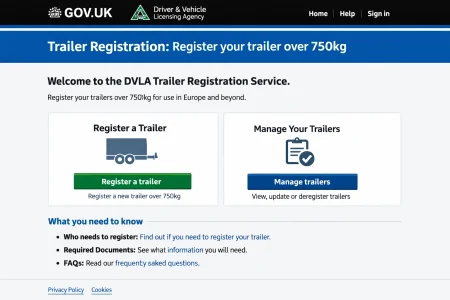
- Go to the DVLA trailer registration portal
➤ Visit gov.uk/register-trailer-to-take-abroad - Create or log into a DVLA trailer registration account
- Submit the required details:
- Your name and address
- Details of the trailer (make, model, VIN/chassis number)
- Weight class (must confirm if trailer is over 750kg)
- Pay the registration fee
- Currently £26 for initial registration (as of 2024)
Once processed, the DVLA will issue:
- A unique trailer registration number (e.g. GBTR123456)
- A downloadable certificate of registration
Note:- You must then display this number on a separate trailer number plate when towing the trailer abroad.
What Documents Do You Need?
Registering your trailer is simpler than registering a vehicle. In most cases, you’ll need:
- Your trailer’s VIN or chassis number
- The trailer’s manufacturer details
- Maximum authorised mass (MAM) or gross weight
- The name of the person or business responsible for the trailer
No MOT or insurance documents are required at this stage, although your trailer must be roadworthy and properly maintained.
How Long Does DVLA Registration Take?
- Online registration is typically processed within 3 to 5 working days.
- You can download your certificate immediately after approval.
- Postage is not required – everything is handled digitally.
Once your number is issued, you can order a plate from a DVLA-registered plate supplier such as JDM Plates – ensuring full legal compliance for international towing.
Why Use a DVLA Registered Number Plate Supplier?
Choosing the right number plate provider isn’t just about aesthetics – it’s about legality. UK law requires that trailer number plates:
- Are made by a DVLA-registered supplier
- Display the trailer registration number in the correct format and spacing
- Use British Standard-compliant materials
- Be clear, legible, and securely fixed
At JDM Plates, we specialise in trailer number plates for international travel, offering:
- Fully road-legal trailer plates
- Custom sizes, including the smallest legal trailer plates on the market
- Fast, tracked delivery anywhere in the UK
Need to Register Multiple Trailers?
You can register and manage multiple trailers under one DVLA account. Ideal for:
- Commercial fleet operators
- Event organisers
- Motorsport teams
- Agricultural users
And with JDM Plates, you can order bulk legal plates with the correct registration numbers – perfect for when time is short and compliance is crucial.
Where to Buy Legal Trailer Number Plates (H2 – 18pt)
Finding the right trailer number plate isn’t just about ticking a box – it’s about peace of mind. You want to know that your plate is 100% legal, designed to last, and supplied by someone who knows the law inside out. That’s where JDM Plates comes in.
Let’s rewind to a recent example: Olivia, a caravan owner from Birmingham, had just registered her trailer through the DVLA to travel through France and Spain. She’d already faced a hiccup – one local supplier offered her a trailer plate that didn’t meet DVLA specs. Fortunately, she found JDM Plates online and was able to order a legal trailer number plate that was printed, dispatched, and delivered to her within 48 hours.
Why Legal Compliance Matters
The DVLA is clear: only DVLA-registered number plate suppliers can legally provide trailer plates that meet current road regulations. That means:
- Correct font and spacing
- BS AU 145e compliant reflective materials
- Supplier name & postcode printed as required by law
- Proper character sizing and alignment
At JDM Plates, we take this seriously – every plate we produce meets these standards. Whether you’re towing a horsebox to Holland or a boat trailer to Ireland, your plate will be road legal, border-ready, and made to last.
Custom Sizes for Tight Spaces
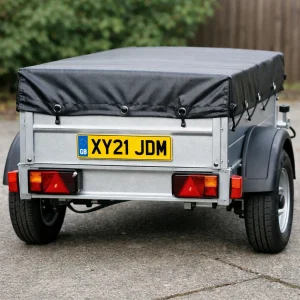
Trailers aren’t one-size-fits-all – and neither are number plates. Some trailer frames offer only limited space for plate mounting, especially on imported or bespoke models. That’s why JDM Plates offers the smallest legal trailer number plates in the UK, perfectly suited for:
- Motorcycle trailers
- Compact boat trailers
- Specialist equipment carriers
- Imported trailer frames with restricted dimensions
These plates are fully legal, with no compromise on visibility or material quality.
Fast UK Delivery & Five-Star Service
When you’re preparing to travel abroad, timing matters. At JDM Plates:
- Orders are dispatched quickly, often within 24–48 hours
- Plates are securely packaged and tracked
- Thousands of customers leave five-star reviews for quality and service
Whether you need one trailer plate or a batch for a fleet, our team ensures you get exactly what you need, fast – with the confidence that it’s legally compliant and professionally made.
Ready to Order your replacement number plate?
If you already have your trailer registration number from the DVLA, ordering your legal trailer plate is simple:
- Head to our Number plate Generator page
- Enter your trailer registration number (e.g. GBTR123456)
- Choose your preferred plate size and finish
- Place your order – we’ll handle the rest
All plates are made in-house using high-spec materials and manufactured to order, giving you full control over fit and finish without compromising on legality.
Fines and Penalties for Non-Compliance
When it comes to trailer registration, the risk of non-compliance isn’t just theoretical – it can lead to real-world fines, vehicle impoundment, and even travel disruption.
Take the example of Paul, a motorsport enthusiast from Derbyshire. He invested thousands in a track-day trailer setup to transport his rally car to Spain. Everything was in order – except for one thing: the trailer wasn’t registered. French authorities stopped him at the border, issued an on-the-spot fine of €135, and turned him back. His trip – along with his budget – was derailed, all for want of a legal trailer number plate.
What Can Happen If You Don’t Comply?
Failing to register your trailer or display a legal trailer plate can lead to:
- Fines abroad – particularly in countries that enforce trailer registration under the 1968 Vienna Convention (France, Spain, Germany, etc.)
- Refusal of entry or denied boarding on ferries, Eurotunnel, or border crossings
- Vehicle seizure or impoundment by foreign police
- Issues with insurance claims in the event of an accident involving an unregistered trailer
- Penalties from UK authorities if towing laws are breached domestically
Insurance & Legal Liability
It’s not just about fines. If you’re involved in a road traffic accident with an unregistered trailer while abroad, your insurance may be invalidated. The trailer’s lack of legal registration and display plate could be interpreted as a failure to comply with international driving laws – leaving you personally liable for any damage or injury.
This becomes especially concerning when towing:
- Expensive cargo (e.g. race cars, horses, motorcycles)
- Business equipment
- Caravans with family onboard
Having a registered trailer with a properly displayed plate isn’t just a DVLA requirement – it’s a form of personal and financial protection.
UK Enforcement
While the trailer registration scheme is geared toward international use, enforcement can still occur within the UK, particularly if:
- You’re using a trailer hired or leased for commercial purposes
- Your trailer is being used in a way that suggests it should be registered
- You’re pulled over and asked for registration proof due to vehicle type or border proximity (e.g. near Dover or Folkestone)
If found without proper compliance, you could face:
- Fixed Penalty Notices
- Court summons for repeat offences
- Trailer seizure if used unlawfully
Avoiding Penalties: The JDM Plates Solution
The easiest way to avoid fines and legal issues is by ensuring your trailer:
- Is registered with the DVLA (if over 750kg and used abroad)
- Displays a compliant trailer number plate from a DVLA-registered supplier
- Is fitted with a plate that meets all British Standard and formatting requirements
By ordering through JDM Plates, you can be sure your trailer plate is:
- Manufactured legally and professionally
- Made using BS AU 145e materials
- Delivered fast with full tracking
- Available in sizes to suit every trailer
Frequently Asked Questions
Do all trailers need number plates in the UK?
No – not all trailers require a unique number plate. For domestic use within the UK, most trailers can display a duplicate of the towing vehicle’s plate (as long as it’s clearly visible and legally spaced).
However, trailers used abroad and weighing over 750kg gross must have a separate DVLA-issued registration number and matching trailer plate.
Can I use my vehicle’s number plate on my trailer?
Yes – but only within the UK. If you’re staying local, you can use your car or van’s registration on the trailer as long as the plate is legible, secure, and formatted correctly. If you’re travelling abroad, however, and your trailer is over 750kg, this setup becomes non-compliant.
To stay legal for international towing, you’ll need a separate trailer registration number issued by the DVLA and displayed on its own plate.
How much does it cost to register a trailer over 750kg?
As of 2024, the DVLA charges £26 for initial trailer registration. This can be done entirely online via the gov.uk trailer registration portal.
Once approved, you’ll receive a unique trailer registration number and certificate – ready for use with a compliant trailer number plate.
What happens if I tow a trailer abroad without a trailer plate?
You risk fines, border refusal, or even vehicle/trailer impoundment depending on the country you’re travelling through. Many European countries, including France, Germany, and Spain, enforce trailer registration rules strictly for foreign visitors.
Displaying a properly formatted trailer plate is not optional – it’s a legal requirement for trailers over 750kg when used outside the UK.