
Importing a vehicle from Japan is rarely a casual decision. For many UK drivers, it’s about securing a car that offers lower mileage, stronger maintenance history, or a model that was never officially released here. From kei cars to performance icons like the Nissan Skyline or Toyota Chaser, Japanese imports continue to grow in popularity across Britain.
According to UK vehicle registration data published by the DVLA, imported vehicle registrations have steadily increased over the past decade, with Japanese imports forming a significant proportion of specialist and enthusiast registrations. The appeal is clear – unique styling, strong reliability records, and attention to engineering detail.
However, once a Japanese import is registered for UK roads, compliance becomes non-negotiable.
One of the most commonly overlooked areas is the number plate. Many owners assume fitting a standard UK registration plate is straightforward. In reality, JDM vehicles were never designed with UK plate dimensions in mind and that’s where problems begin.
Incorrect sizing can result in poor fitment, damaged bumpers, MOT advisories, and even fines. More importantly, it can make an otherwise immaculate import look poorly converted and a little bit of an eyesore!
This is where JDM import number plates differ from standard UK plates. They require specialist sizing knowledge, full understanding of DVLA number plate regulations, and precise manufacturing to ensure they remain fully road legal while physically fitting the vehicle correctly.
Size matters – not just for aesthetics, but for legality.
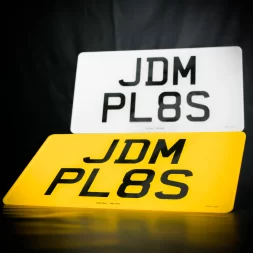
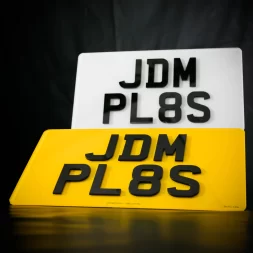
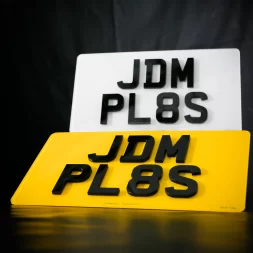
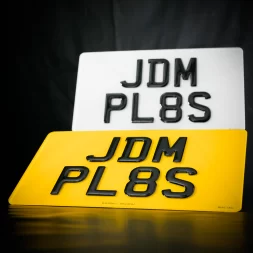
Why Japanese Imports Need Specialist Number Plates
At first glance, a number plate might seem universal. After all, it’s simply a reflective panel displaying a registration mark. But plate dimensions vary significantly between countries – and Japan is no exception.
Japanese number plates are physically smaller than UK plates. They are typically squarer in proportion, with shorter overall widths. Manufacturers design bumpers, recesses, and mounting points to accommodate this format.
When a vehicle arrives in the UK and receives its British registration mark, it must display plates that meet strict legal criteria under DVLA rules. These regulations cover:
- Character height and stroke width
- Spacing between letters and numbers
- Use of the Charles Wright font
- Reflective material standards
- Required margins around the registration
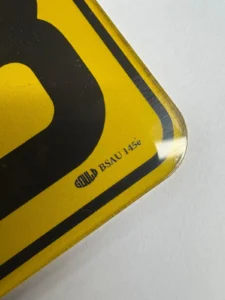
- British Standard markings (BS AU 145e)
You can review official guidance directly via the UK Government website on vehicle registration plates although we do have in depth information on our website regarding number plate specifics which delves deeper into legislation and not just guidance notes.
Here’s the issue: a standard UK plate measures 520mm x 111mm. Many Japanese bumpers simply do not have space for that width without overhang.
This leads to common problems such as:
- Plates extending beyond the recess
- Plates bending when secured
- Visible drilling into painted bumper areas
- Uneven or off-centre positioning
Some owners attempt to resolve this by trimming the plate or altering character spacing. That immediately renders the plate illegal. Even small spacing changes can breach DVLA regulations and result in MOT advisories or enforcement penalties; especially when the BS markings have been cut off from the bottom left of the number plate.
What many drivers don’t realise is that UK law allows reduced-size number plates for imported vehicles – provided a standard plate genuinely cannot fit and all other legal dimensions remain compliant but do not allow import number plates on UK cars!
This exemption exists specifically for vehicles like Japanese imports. It is not a workaround. It is part of the regulatory framework which was implemented as an amendment to regulations back in 2002.
However, producing a reduced-size plate that remains fully compliant requires precision. Character proportions cannot be altered. Spacing rules must be preserved. Margins must still meet minimum legal requirements and this is where specialist suppliers make the difference who have the machinery, knowledge and skills to ensure these small number plates remain road legal!
At JDM Plates, the focus is on manufacturing the smallest legal UK import number plates available – ensuring correct fitment without compromising legality. That level of accuracy prevents common issues and protects both the appearance and compliance of your vehicle.
What DVLA Regulations Say About Import Plates
When discussing JDM import number plates, clarity around the law is essential. There is widespread confusion online about what is permitted for imported vehicles and what is not.
All number plates displayed on UK roads must comply with the Road Vehicles (Display of Registration Marks) Regulations and DVLA guidance. These rules apply equally to standard UK vehicles and imported cars – but there is a specific provision for vehicles where a standard plate cannot physically fit.
For standard UK vehicles, the legal character dimensions are:
- Character height: 79mm
- Character width: 50mm (except “1” or “I”)
- Stroke width: 14mm
- Space between characters: 11mm
- Space between groups: 33mm
- Mandatory margins
- Reflective material meeting BS AU 145e
- Charles Wright typeface only
However, imported vehicles are permitted to use reduced character sizing where a full-size plate cannot be accommodated.
For imported car number plates, the following reduced dimensions apply:
- Character height: 64mm
- Character width: 44mm (except “1” or “I”)
- Stroke width: 10mm
- Space between characters: 10mm
- Space between groups: 30mm
- Minimum margins around the plate must still be maintained
- Reflective material must meet BS AU 145e standard
- Correct use of the Charles Wright typeface remains mandatory
This is not a styling option. It is a regulated allowance designed specifically for vehicles such as Japanese imports where standard UK sizing would cause fitment problems. Fun fact; these are the same dimensions as motorcycle number plate requirements.
The key principle is this:
- The font style cannot change.
- The proportions must remain correct.
- Spacing rules still apply.
- Reflectivity standards remain compulsory.
What changes is the scale – not the legality.
Why This Matters for Japanese Imports
Many JDM vehicles – including models such as the Nissan Skyline, Toyota Chaser, and Mazda RX-7 – were never designed around 520mm-wide UK plates. Their bumper recesses are often narrower and shorter but using the legally permitted reduced character format allows:
- Shorter overall plate width
- Improved fit within factory recess
- Clean, centred mounting
- No drilling into painted surfaces
- Full compliance with DVLA regulations
Where owners go wrong is attempting to reduce plate size by illegally tightening spacing or trimming margins. That is not the same as manufacturing a compliant reduced-size import plate.
A properly produced Japanese import number plates UK setup will:
- Use the correct 64mm character height and relevant character requirements
- Maintain legal spacing
- Include British Standard markings
- Remain fully readable by ANPR systems
ANPR and Enforcement Considerations
ANPR systems across the UK rely on consistent font and spacing standards to read plates accurately. According to Home Office data, up to 90 million vehicle reads occur daily through roadside and mobile enforcement systems.
If a plate uses incorrect spacing or non-compliant font proportions, it may fail camera recognition checks. This can trigger enforcement attention even if the registration itself is legitimate.
Reduced-size plates must therefore balance:
- Physical fitment
- Legal compliance
- Camera readability
At JDM Plates, all reduced size number plates for imports are manufactured within these regulated dimensions. That ensures they are not only visually correct but fully compliant under scrutiny.
The JDM Number Plate Recess Problem
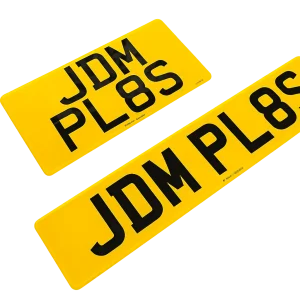
One of the biggest practical challenges with JDM import number plates isn’t the law – it’s the physical design of the vehicle itself. Japanese Domestic Market vehicles were engineered for Japanese plate formats. Those plates are smaller, squarer, and proportioned differently to UK registration plates. As a result, manufacturers shaped bumper recesses precisely around that size.
When these vehicles are imported into the UK and registered with a British plate, the difference becomes immediately obvious.
A standard UK plate measures 520mm wide. Many Japanese bumpers simply do not provide that much usable space and are typically 330mm or 303mm wide.
Common examples include:
- Narrow front recesses on Nissan Skyline models
- Compact rear bumpers on Toyota Chaser and Mark II variants
- Tight plate housings on Mazda RX-7 and Honda Integra imports
- Smaller centre mounting areas on kei cars
In these cases, attempting to install a full-width UK plate often results in:
- Overhang beyond the bumper recess
- Plate corners sitting proud of the bodywork
- Curvature caused by forced mounting
- Visible screws drilled outside factory mounting points
- Uneven alignment
For enthusiasts who have carefully sourced and imported their vehicle, this can be frustrating. A poorly fitting plate draws attention for the wrong reasons.
Why Reduced-Size Number Plates Solve the Problem Properly
The correct solution is not altering a standard plate – it’s manufacturing a plate designed specifically for imports.
By using the legally permitted reduced character format (64mm height with 10mm stroke width), a plate can be produced that:
- Fits neatly within the factory bumper recess
- Maintains correct margins
- Preserves legal spacing
- Meets BS AU 145e reflective standards
- Remains fully readable by ANPR systems
This is where specialist manufacturing becomes essential.
At JDM Plates, the focus is on producing the smallest legal import number plates available – tailored specifically for Japanese vehicles. That means calculating the shortest possible overall plate width without breaching character proportions or spacing laws. However, our generic import number plates will also fit but some enthusiasts to prefer to go ever smaller!
It’s a precise balance between:
- Compliance
- Fitment
- Appearance
Generic high-street suppliers typically produce fixed template sizes such as the standard UK 520x111mm number plate size. They rarely consider bumper recess depth, curvature, or mounting alignment specific to Japanese imports.
Specialist production from companies such as JDM Plates do!
Protecting the Vehicle’s Design Integrity
Japanese performance cars and kei vehicles are proportioned carefully. Plate recesses sit within the natural flow of the bumper design. Forcing an oversized UK plate into that space disrupts those lines immediately.
A correctly sized Japanese import number plates maintains:
- Factory visual balance
- Clean symmetry
- Proper centring
- No exposed drilling
- No unnecessary modification
- Perfect fitment
For collectors and resale-minded owners, these details influence perception. Buyers increasingly look for imports that have been converted properly rather than cheaply.
In the growing UK import market, presentation matters. According to DVLA data, imported vehicle registrations remain consistently strong year-on-year, which means competition among sellers is increasing. A car that looks properly converted will always stand out against one with obvious shortcuts.
The number plate may be small, but it is one of the first things people notice and a correctly fitted JDM import number plate are made to measure!

Why High-Street Number Plate Suppliers Get It Wrong
On the surface, ordering number plates seems simple. Walk into a high-street motor factor, provide proof of entitlement, and leave with a pair of plates. For standard UK vehicles, that process usually works without issue.
For Japanese imports, it rarely does; most high-street suppliers operate on fixed sizes. Their systems are built around standard UK sizing – typically 520mm x 111mm for cars. When presented with a Japanese import that has a smaller bumper recess, they often encounter limitations.
The typical responses are:
- “That’s the legal size – it has to be that width.”
- “We can’t make them any smaller.”
- “You’ll have to make it fit.”
- “We don’t do that size.”
In many cases, staff simply are not trained on the specific regulations that apply to imported vehicles. The reduced 64mm character allowance is frequently misunderstood or overlooked which leads to three common outcomes.
1. Oversized Standard Plates Supplied Anyway
Some suppliers insist on providing full-width plates. Owners are then left to deal with:
- Poor fitment
- Visible overhang
- Awkward mounting
- Compromised appearance
While technically legal, the result often looks unfinished and may require unnecessary drilling into painted bumpers and will often result in purchasing another set of import number plate at a later date costing more money!
2. Incorrectly Modified Plates
Other suppliers attempt to “customise” plates by:
- Reducing spacing illegally
- Trimming margins
- Using non-compliant font variations
- Producing plates without correct British Standard markings
These modifications may make the plate physically smaller, but they breach DVLA number plate regulations. That creates risk during MOT inspections and roadside checks resulting in a plate that looks right but is dimensionally incorrect can still fail compliance resulting in £100 fines and possible section 69’s or even Q plated cars!
3. Low-Quality Materials
Even where sizing is correct, some generic suppliers cut costs through materials that do not meet current BS AU 145e reflectivity standards.
The British Standard requires plates to:
- Withstand impact
- Resist delamination
- Maintain reflectivity
- Avoid cracking under stress
- and more…
Poor-quality acrylic or low-grade reflective backing may pass initial visual inspection but degrade quickly, particularly on vehicles that are stored outdoors or driven year-round.
For import owners who have invested significantly in sourcing their vehicle, cutting corners on compliance rarely makes sense. Incorrectly manufactured number plates could result in ‘ghost plates’; especially those supplies who use modified or incorrect black acrylic when making 4D number plates which doesn’t reflect infrared light used by ANPR cameras.
Why Specialist Number Plate Manufacturing Matters
Producing properly compliant reduced size number plates for imports requires more than selecting a smaller template.
It involves:
- Calculating minimum legal margins
- Applying correct 64mm character sizing
- Preserving 10mm stroke width
- Maintaining 10mm spacing between characters
- Preserving 30mm group spacing
- Ensuring British Standard markings are included
- Confirming ANPR readability
That combination of legal knowledge, the correct printing techniques and machinery as well as production accuracy is not typically found in high-street environments focused on volume.
At JDM Plates, the focus is exclusively on number plate manufacturing – including Japanese import number plates UK drivers rely on for correct fitment. That specialist approach allows for the production of the smallest legal plates available, tailored specifically for JDM vehicles.
It also means customer support teams understand:
- Bumper recess constraints
- Vehicle-specific fitment challenges
- Registration spacing compliance
- DVLA documentation requirements
When you’re dealing with a vehicle that was never built for UK specifications, expertise matters and you need an expert number plate maker.
A Growing Market Demands Higher Standards
Japanese imports are no longer rare on UK roads. As the market grows, so does scrutiny from both buyers and enforcement agencies. Vehicles that have been converted thoughtfully stand out immediately and those fitted with generic, ill-fitting, or non-compliant plates do the opposite. A properly manufactured plate signals that the owner has taken care with the conversion process – not rushed it and in a competitive resale market, small details influence buyer confidence.
Protecting the Look and Value of Your Import With Proper Number Plates
For many owners, a Japanese import is more than transport. It’s a considered an investment purchase – often researched for months, sometimes years. Whether it’s a turbocharged performance model, a rare factory specification, or a clean, low-mileage daily driver, the appeal lies in originality and condition.
That originality can be undermined surprisingly quickly by something as simple as poor plate fitment.
Japanese vehicles were styled around their domestic plate format. The proportions of the bumper, the curvature of the recess, and the positioning of mounting points were all designed with a smaller, squarer plate in mind. When a full-width UK plate overhangs that recess, the balance shifts immediately.
It may seem minor, but visually it can:
- Disrupt the symmetry of the front or rear bumper
- Highlight exposed screws or drill holes
- Draw attention to an awkward mounting position
- Make the car look poorly converted
Enthusiasts notice these details instantly.
First Impressions Matter – Especially at Resale
The UK market for imported vehicles has matured significantly over the past decade. Buyers are more informed, and expectations are higher. A car advertised as a clean, well-maintained Japanese import will be scrutinised closely.
Small details influence buyer confidence.
A correctly fitted set of JDM import number plates suggests:
- The owner understands UK compliance
- The vehicle has been converted properly
- No shortcuts were taken
- Attention to detail has been consistent
By contrast, visible trimming, incorrect spacing, or ill-fitting standard plates can create doubt – even if the rest of the vehicle is immaculate.
In a competitive resale market, perception can affect value. Buyers often view presentation as a reflection of overall care. If something as visible as the number plate has been handled poorly, questions arise about what else may have been rushed.
Preserving Factory Design
Many Japanese vehicles are known for balanced styling. From subtle factory aero kits to carefully contoured bumpers, design proportions are intentional.
Using legally manufactured Japanese import number plates UK drivers can rely on helps preserve those proportions.
A reduced-size plate using the correct 64mm character format allows:
- Clean fit within the factory recess
- Proper centring
- No forced curvature
- No oversized overhang
- A finish that looks intentional rather than adapted
This maintains the vehicle’s original visual intent – something collectors and enthusiasts place high value on.
Long-Term Ownership Considerations
Presentation is not only about resale. It also affects long-term ownership satisfaction.
Every time you approach your vehicle, small inconsistencies stand out. An oversized plate that never quite sat correctly can become a constant irritation. Over time, drilled mounting points or stressed plastic can even cause cosmetic damage.
Choosing properly manufactured reduced size number plates for imports from the outset avoids:
- Replacing incorrectly sized plates later
- Re-drilling bumpers
- Removing adhesive residue from poor mounting attempts
- Paying twice for compliance
It’s a one-time decision that prevents recurring frustration.
Number Plate Compliance Protects Value
There is also the legal side to consider. MOT advisories for number plate issues may seem minor, but repeated advisories can appear on vehicle history records. For cautious buyers, even small compliance concerns can prompt negotiation.
More serious administrative issues can have longer-term consequences.
In rare cases, vehicles that fail to meet registration requirements properly – particularly where identification, documentation, or compliance standards are questioned – may be issued with a Q-registration plate.
A Q-plate is typically assigned when:
- The vehicle’s age cannot be accurately verified
- Major components are from mixed sources
- Identity documentation is insufficient
- The registration history raises compliance concerns.
- The vehicle has been associated with anti-social behaviour.
While number plates alone do not automatically result in a Q-registration, a pattern of improper conversion, incorrect documentation, or regulatory non-compliance during the import process can create complications with the DVLA.
For imported vehicles, especially JDM cars, maintaining strict compliance during registration and conversion is essential.
Why Q-Plates Affect Resale Value
Within the UK market, Q-registered vehicles are often viewed with caution. Many buyers associate them with:
- Uncertain vehicle history
- Kit cars
- Rebuilt or modified vehicles
- Insurance complications
- Reduced desirability
- The car may have been associated with criminal activity or antisocial behaviour.
Enthusiast buyers in particular tend to favour age-related or original registrations, as they confirm the vehicle’s manufacturing year and provenance.
A Q-plate can:
- Reduce resale value significantly
- Limit insurance options
- Deter future buyers
- Affect eligibility for certain classic policies
For a clean Japanese import with verified age and documentation, preserving that status matters.
Even where a Q-plate has been issued legitimately, such as on Ministry of Defence vehicles, market perception often influences price. Buyers frequently value clarity and originality in registration history.
Attention to Detail Matters Throughout the Process
While number plate sizing alone does not determine registration status, it forms part of the wider compliance picture.
During import and UK registration, ensuring:
- Correct documentation
- Accurate age verification
- Proper DVLA application
- Fully compliant JDM import number plates
- Adherence to DVLA display regulations
demonstrates that the vehicle has been converted carefully and correctly.
Choosing correctly manufactured Japanese import number plates UK drivers can rely on may seem like a small step, but it contributes to the overall presentation of a properly handled import.
In a market where buyers are increasingly informed, details influence trust. And trust influences value.
At JDM Plates, the approach is simple – produce legally compliant, reduced-size plates that protect both your vehicle’s appearance and its standing on UK roads.
Common Mistakes First-Time Import Owners Make
Importing a vehicle from Japan can be exciting, but for first-time buyers, the process often feels overwhelming. Shipping logistics, NOVA declarations, registration paperwork, insurance, and MOT preparation all compete for attention. In that mix, number plates are frequently treated as a minor detail.
That assumption is where problems begin.
Over the years, several patterns have emerged among new import owners – especially when it comes to JDM import number plates.
Mistake 1: Assuming Standard UK Plates Will Fit
One of the most common errors is assuming a standard 520mm-wide UK plate will sit correctly on a Japanese bumper.
In many cases, it does not.
Owners only discover the issue after collecting plates and attempting installation. The result is often:
- Plate overhang
- Off-centre alignment
- Bending or flexing during fitting
- Drilling new holes outside factory mounting points
At that stage, frustration sets in – and some resort to modifying the plate to make it fit. That is where legality can quickly be compromised.
Planning for reduced size number plates for imports from the outset avoids this entirely. So if you have lost a number plate, had a number plate stolen from your JDM car or recently had your imported car brought into the UK; considerations need to be made prior to purchasing a replacement JDM import number plate.
Mistake 2: Buying Plates Before Confirming Legal Dimensions
Another frequent issue is ordering “shortened” plates online without verifying compliance.
Some online sellers advertise “import plates” but:
- Reduce spacing below legal limits
- Remove required margins
- Alter character proportions
- Omit British Standard markings
To the untrained eye, the plate looks correct. However, during MOT inspection or roadside checks, these small deviations can result in advisories or penalties.
For imported cars, legal reduced character sizing must follow the exact specifications:
- 64mm character height
- 44mm character width (except “1” or “I”)
- 10mm stroke width
- 10mm spacing between characters
- 30mm spacing between groups
- Correct margins
- BS AU 145e compliance
- Charles Wright typeface
Anything outside these measurements is not compliant.
Mistake 3: Treating Plates as an Afterthought
Many first-time importers focus heavily on:
- Shipping and customs clearance
- NOVA registration
- Age-related registration applications
- Insurance quotes
- MOT testing
Number plates are often left until the final stage.
However, number plates are one of the most visible parts of UK conversion. They are also one of the easiest areas to get wrong.
Addressing Japanese import number plates UK requirements early ensures:
- Correct sizing ordered first time
- No last-minute MOT concerns
- Clean bumper installation
- No unnecessary reordering
It also reduces stress during what can already be a paperwork-heavy process.
Mistake 4: Overlooking ANPR and Enforcement Standards
Some new import owners focus purely on appearance. While aesthetics matter, compliance goes further.
ANPR systems across the UK read millions of plates daily. If font spacing, reflectivity, or character proportions fall outside regulation, the system may struggle to read the registration correctly.
This can lead to:
- Increased roadside stops
- Unwanted enforcement attention
- Administrative inconvenience
A properly manufactured UK import number plates setup ensures readability under both human and camera scrutiny.
Mistake 5: Choosing the Cheapest Option
Budget is often stretched during an import process. Shipping, taxes, insurance, and registration costs add up quickly.
Because number plates seem inexpensive by comparison, some owners choose the lowest-cost option available.
The difference between a cheap, non-specialist plate and a correctly manufactured compliant plate may be small in price – but significant in outcome.
Poor-quality materials can:
- Fade
- Crack
- Delaminate
- Lose reflectivity
Replacing plates twice costs more than choosing correctly from the beginning.
Experience Makes the Difference
Import ownership becomes far smoother when working with number plate suppliers who understand:
- Japanese bumper dimensions
- Reduced legal character sizing
- DVLA documentation standards
- ANPR readability requirements
- The aesthetic expectations of enthusiasts
At JDM Plates, that focus on smallest legal compliance and precise fitment is central to production. It’s not about selling any plate – it’s about manufacturing plates that work specifically for imports.
For first-time owners, guidance from a specialist removes uncertainty and prevents common pitfalls. Getting the details right from the beginning protects both the vehicle and the ownership experience.
Here at JDM Plates, we work with a vast range of importing companies for this reason; importers themselves know we are experts in the field of import and replacement number plates so tend to stick with us and our services!
Frequently Asked Questions
Are smaller number plates legal on Japanese imports in the UK?
Yes. Imported vehicles can legally use reduced character sizing if a standard UK plate cannot physically fit the vehicle. For imported cars, characters may be 64mm high with 44mm width (except “1” or “I”), 10mm stroke width, 10mm spacing between characters, and 30mm spacing between groups. The plate must still meet DVLA regulations, use the Charles Wright typeface, maintain correct margins, and comply with BS AU 145e reflective standards.
Can I cut down a standard UK plate to make it fit my JDM car?
No. Trimming a standard plate usually removes required margins and makes the plate illegal. Altering spacing or modifying character proportions also breaches DVLA number plate regulations. Reduced-size import plates must be manufactured correctly from the outset to remain compliant.
Will incorrect number plates cause an MOT failure?
They can. MOT testers check that plates are legible, correctly spaced, securely mounted, and compliant with legal dimensions. Incorrect spacing, non-standard fonts, or missing British Standard markings may result in advisories or failure depending on severity.
Do reduced-size import plates still work with ANPR cameras?
Yes – provided they are manufactured within legal dimensions. Properly produced JDM import number plates using the correct character sizing and reflective materials remain fully readable by ANPR systems used across the UK.
What happens if my imported car is issued with a Q-plate?
A Q-registration is typically issued when a vehicle’s age or identity cannot be verified. While number plates alone do not cause a Q-plate, poor compliance or documentation issues during the import process can create complications. Q-registered vehicles often carry lower resale value and may be viewed cautiously by buyers and insurers.
Where can I buy legal Japanese import number plates in the UK?
You should purchase from a DVLA-registered number plate supplier that understands import regulations and reduced character sizing rules. Specialist manufacturers such as JDM Plates produce UK import number plates designed specifically for Japanese vehicles, ensuring correct fitment and compliance.