Are 3D Number Plates Legal?
3D number plates have become one of the most popular upgrades for drivers who want a more premium look without breaking UK road laws. At JDM Plates, we’re often asked the same question: are 3D number plates legal in the UK; especially with the most recent petition to ban 3D gel and 4D number plates in 2026.
The good news is that 3D number plates are currently legal, including 3D gel number plates, as long as they meet DVLA regulations and comply with BSAU 145e standards. Issues only arise when plates use non-compliant materials, colours, spacing, or fonts. There has been a massive uproar recently within the number plate industry which is to do with ‘ghost number plates‘. Ghost number plates are completely different from 3D gel number plates and in this guide, we explain exactly what makes a 3D number plate road legal, how to avoid common mistakes, and how to choose a compliant option with confidence.
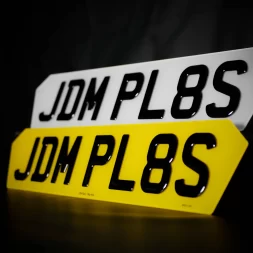
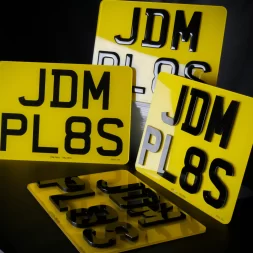
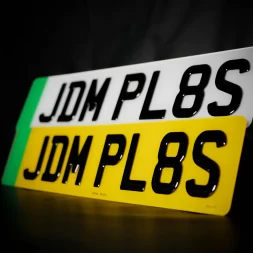
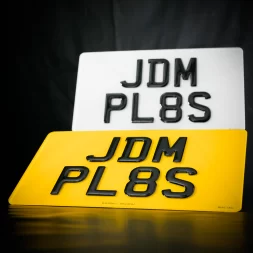
Are 3D Plates Legal?
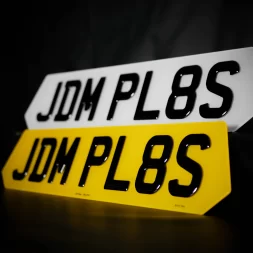
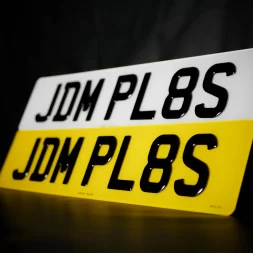
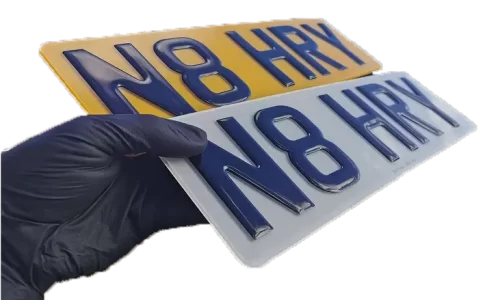
3D number plates have become increasingly popular with UK drivers looking to upgrade the appearance of their vehicle. With raised characters and a more premium finish, they offer a subtle way to stand out without going over the top. The three dimensional effect creates an eye-catching visual impact not possible with traditional flat plates, and there is a wide range of 3D number plate options available, including different styles and finishes to suit personal preferences. But one question comes up time and time again: are 3D number plates legal in the UK?
The short answer is yes. 3D number plates can be road legal, but only if they are MOT compliant and meet strict UK regulations and the gel characters have been manufactured in line with correct BSau145e standard. This means they must adhere to all DVLA requirements for font, size, spacing, and reflectivity to ensure both legal and MOT standard compliance. Both 3D and 4D number plates feature raised characters and must follow the same regulations as standard number plates to be considered legal. On this page, we explain exactly what makes a 3D number plate legal, where drivers can get caught out, and how to choose a compliant option.
Are 3D Number Plates Legal in the UK?
Yes, 3D number plates are legal in the UK, provided they comply with DVLA regulations and the BSAU 145e standard.
UK law focuses on readability, reflectivity, and character formatting. The fact that characters are raised does not make a number plate illegal on its own. Problems only arise when 3D plates fail to meet specific design and material requirements.
A road-legal 3D number plate must:
- Be made from reflective material
- Use a standard white background (front) or yellow background (rear)
- Feature black characters of a single, solid black colour
- Use the standard ‘Charles Wright 2001’ font, with specific character height, width, and spacing requirements
- Be clearly readable at all times
- Include the name and postcode of the supplier
- Be marked with the British Standard number (BSAU 145e)
- Meet BSAU 145e testing standards
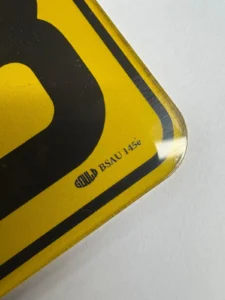
If these conditions are met, a 3D number plate is legal for use on UK roads. All legal 3D number plates must include the name and postcode of the supplier and be marked with the British Standard number. 3D number plates must also display black characters on a white background for front plates and on a yellow background for rear plates.
Why Some 3D Number Plates Are Illegal
Although 3D plates themselves can be legal, some variations are not.
Common reasons a 3D number plate may be illegal include:
- Coloured or tinted backgrounds
- Shaded or multi-coloured characters
- Incorrect spacing to spell names or words
- Non-standard fonts
- Reduced reflectivity due to the materials used
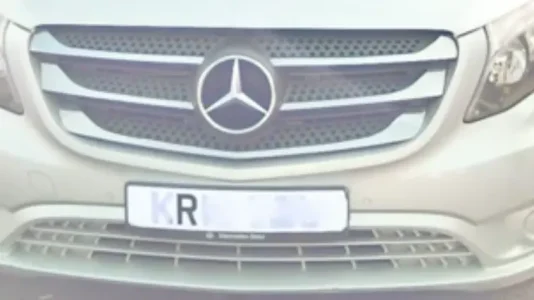
These changes can affect visibility for both drivers and ANPR cameras, which is why they are not permitted on UK roads.
Some 3D number plates are classed as illegal mainly due to being invisible to ANPR cameras. The vast majority of number plate component suppliers offer fully legal 3D gel number plate characters but unfortunately there are some suppliers out there who purchase their digits from China. Chinese supplied 3D gel letters aren’t made with UV stable polyurethane resin; it’s more of a ‘glue’ which melts in the sun and rehardens – this causes a very distorted finish. Other supplier don’t place the aforementioned resin on a black vinyl either; some would used a clear vinyl with a dyed resin which would also be invisible to infrared ANPR cameras. The black vinyl is there to block the light from a flash or create a black shape for ANPR cameras from the back reflective sheeting.
Will 3D Number Plates Fail an MOT?
Legal 3D number plates will not fail an MOT.
During an MOT, testers check that number plates are:
- Correctly coloured
- Clearly readable from a distance
- Properly reflective
If a 3D plate meets these requirements, it should pass without issue. Plates that include illegal design elements, however, may result in a failure.
3D vs 4D Number Plates – What’s the Difference?
Drivers often confuse 3D and 4D number plates.
- 3D number plates use raised gel or resin characters
- 4D number plates use laser-cut acrylic characters
Both styles can be road legal if they meet UK regulations. Legality depends on design and compliance, not whether the plate is 3D or 4D.
Choosing Legal 3D Number Plates
If you’re considering upgrading your plates, the safest option is to buy from a registered UK supplier that follows DVLA rules.
At JDM Plates, we supply road-legal 3D gel number plates manufactured to UK standards. All compliant plates are produced in line with BSAU 145e regulations, ensuring they are suitable for everyday road use.
Always avoid sellers offering heavily customised or tinted designs marketed as “road legal” if they don’t meet official standards.
FAQs About 3D Number Plates
Are 3D number plates legal in the UK?
Yes. 3D number plates are legal if they meet DVLA and BSAU 145e requirements.
Are 3D gel number plates legal?
Yes, provided they use solid black characters, a standard reflective background, and comply with UK regulations.
Can 3D number plates get you fined?
Only if they are non-compliant, illegal designs can result in fines or MOT failures.
Do police check 3D number plates?
Yes. Police can stop vehicles if the number plates appear illegal or difficult to read.
Looking to buy 3D Plates?
3D number plates are legal in the UK when they are manufactured correctly. The key is ensuring your plates meet all DVLA regulations and comply fully with BSAU 145e standards.
If you want a visual upgrade without risking fines, MOT failures, or unwanted attention from the police, choosing a fully road-legal 3D gel number plate from a compliant supplier is always the safest option. At JDM Plates, we focus on producing number plates that look great while remaining completely legal for everyday road use.